
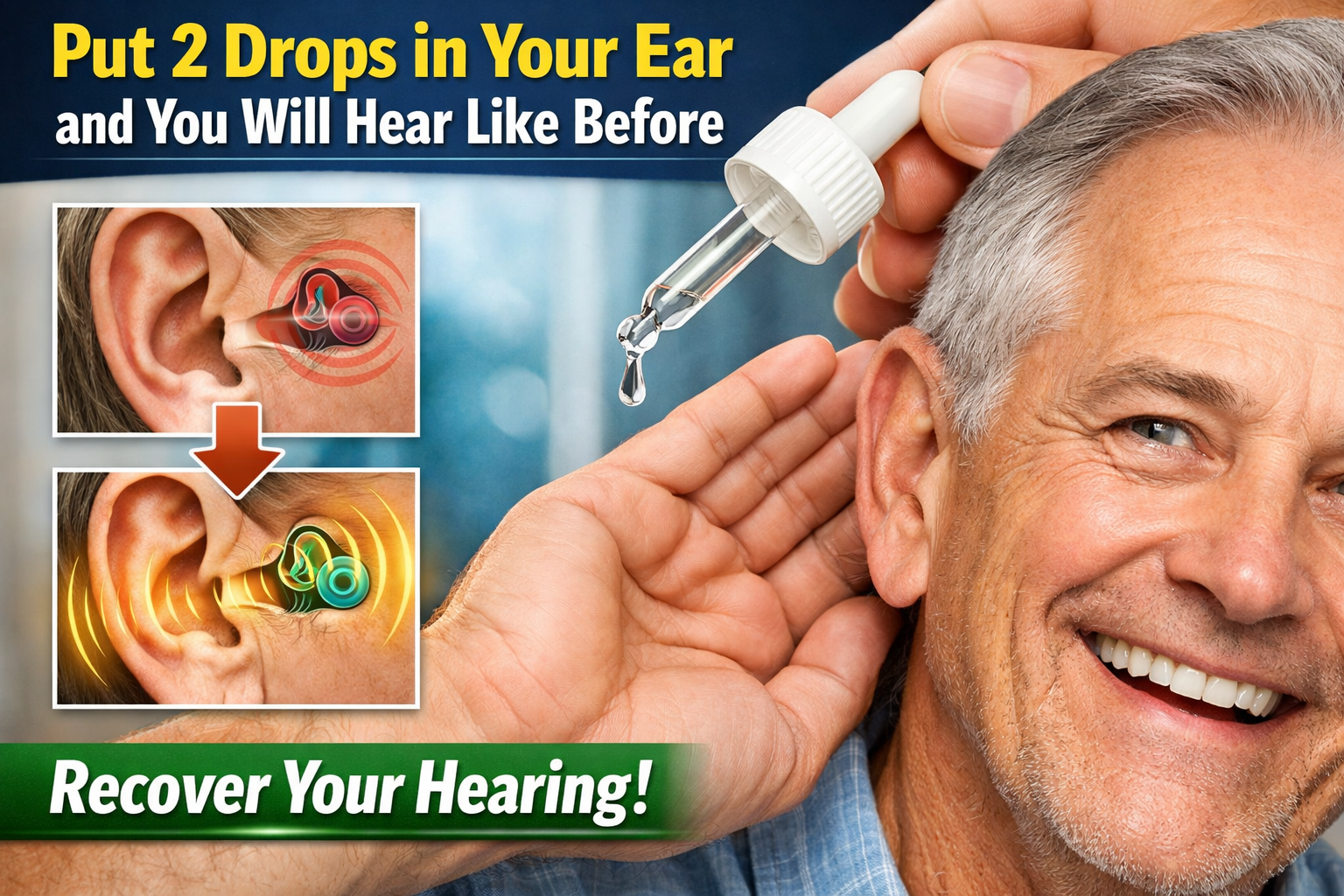
Put 2 Drops in Your Ear and You Will Hear Like Before. Recover Your Hearing
You don’t notice how much you rely on your hearing—until it starts slipping away.Maybe you’ve begun turning up the television louder than usual. Maybe conversations feel harder to follow. You lean in, nod politely, and hope you didn’t miss something important. When that happens, it’s natural to search for quick solutions. You’ve probably seen the claim: “Put 2 drops in your ear and you will hear like before. Recover your hearing.”
It sounds simple. Almost too simple.
But here’s the truth: in some cases, ear drops really can improve your hearing. In others, they won’t. The key is understanding why your hearing changed in the first place—and what you can safely do about it.
Let’s break it down clearly and practically.
Why Your Hearing Might Be Fading
Before you can recover your hearing, you need to understand what’s causing the problem.
Hearing loss typically falls into two main categories:
1. Conductive Hearing Loss
This happens when sound can’t travel properly through your outer or middle ear. Common causes include:
- Earwax buildup
- Fluid behind the eardrum
- Mild infections
- Blockages
This type is often temporary—and sometimes reversible.
2. Sensorineural Hearing Loss
This affects the inner ear or hearing nerve. Causes include:
- Aging
- Long-term exposure to loud noise
- Certain medications
- Nerve damage
This type is usually permanent, though treatments can improve your quality of life.
If your hearing feels muffled or blocked, especially in one ear, wax buildup is often the culprit. And yes—this is where “2 drops in your ear” might actually help.
Can 2 Drops Really Help You Hear Like Before?
If your hearing problem is caused by hardened earwax, the answer might be yes.
Earwax (also called cerumen) protects your ears. But sometimes it builds up and hardens, blocking sound waves from reaching your eardrum. When that happens, everything sounds dull or distant.
Using the right ear drops can:
- Soften hardened wax
- Help it break down naturally
- Restore clearer sound
But—and this matters—ear drops will not repair nerve damage or reverse age-related hearing loss.
So before you try anything, ask yourself:
- Do your ears feel blocked?
- Do you notice temporary improvement after showering?
- Is the hearing loss sudden and mild?
If yes, wax buildup may be involved.
Safe Ear Drops That May Support Hearing Recovery
If you suspect earwax is the issue, here are safe options you can consider.
1. Warm Olive Oil
Simple. Accessible. Often effective.
How it helps:
- Softens hardened wax
- Lubricates the ear canal
- Encourages natural removal
How to use it safely:
- Warm (not hot) a small amount of olive oil.
- Lie on your side.
- Place 1–2 drops into the affected ear.
- Stay in position for 5–10 minutes.
- Repeat once daily for up to 3–5 days.
Many people notice gradual improvement as the blockage loosens.
2. Diluted Hydrogen Peroxide (3%)
Hydrogen peroxide can help break down wax through gentle bubbling action.
Basic mixture:
- 1 part 3% hydrogen peroxide
- 1 part clean warm water
Application steps:
- Place a few drops into your ear.
- You may hear fizzing—that’s normal.
- After several minutes, tilt your head to let it drain.
Use this method sparingly. Overuse can irritate your ear canal.
3. Over-the-Counter Earwax Drops
Pharmacy solutions are designed specifically to dissolve earwax safely. These often contain carbamide peroxide and are tested for ear use.
If you prefer a ready-made option, this may be the simplest route.
Important Safety Rules You Should Never Ignore
Before putting anything into your ear, keep these guidelines in mind:
- Never use drops if you suspect a ruptured eardrum.
- Stop immediately if you feel pain or dizziness.
- Do not insert cotton swabs or sharp objects.
- If symptoms last more than a week, see a professional.
Your ears are delicate. Treat them that way.
When Ear Drops Won’t Restore Your Hearing
Let’s be honest: not all hearing loss can be reversed.
If your hearing faded gradually over years, especially after age 50, it may be age-related. If you worked in noisy environments or used headphones at high volume for long periods, nerve damage could be involved.
In those cases, ear drops won’t bring your hearing “back like before.”
However, you still have options:
- Hearing aids
- Assistive listening devices
- Professional wax removal
- Audiologist evaluations
Modern hearing solutions are smaller, smarter, and more effective than ever.
Lifestyle Habits That Protect and Support Your Hearing
Even if you can’t fully reverse hearing damage, you can prevent it from getting worse.
Here’s how:
Protect Your Ears from Loud Noise
- Keep headphone volume below 60%.
- Take listening breaks.
- Wear ear protection in noisy environments.
Improve Blood Flow
Healthy circulation supports inner ear function.
- Exercise regularly.
- Maintain healthy blood pressure.
- Eat foods rich in omega-3 fatty acids.
Support Ear Health Through Nutrition
Certain nutrients are linked to hearing preservation:
- Magnesium
- Zinc
- Vitamin B12
- Antioxidants
Your ears depend on healthy cells and strong blood supply—just like the rest of your body.
When You Should See a Doctor Immediately
Some symptoms require urgent attention:
- Sudden hearing loss
- Severe ear pain
- Ringing that won’t stop
- Fluid or pus discharge
- Dizziness or balance issues
Sudden hearing loss is a medical emergency. Acting quickly can make a difference.
So, Can You Recover Your Hearing?
If your hearing issue is caused by earwax buildup, then yes—putting 2 drops in your ear might genuinely help you hear clearly again.
If the cause is deeper, such as nerve damage or aging, recovery may not mean “restoring” hearing completely. Instead, it means improving clarity, comfort, and communication using the right tools.
The key isn’t chasing miracle fixes. It’s identifying the real cause and choosing the safest path forward.
Take Action Today
If you suspect earwax blockage, try a safe softening method for a few days. Monitor your symptoms carefully. If improvement doesn’t come—or if anything feels wrong—schedule a hearing evaluation.
You deserve to hear conversations clearly. You deserve confidence in social settings. And you deserve real answers, not empty promises.
Don’t ignore the signs. Start taking care of your hearing today.
Clear sound changes everything.